mandag den 24. september 2012

The Crisis of Representative Democracy

..we keep shuffling around the same deck of cards, hoping that this meaningless exercise will somehow make a difference. Hope abounds when the US elects its most progressive President in decades — but even he ends up bailing out Wall Street at the expense of millions of families who lose their homes. Heck, he even keeps a personal kill list and forsakes his #1 election promise to close Guantanamo! In the UK, a Liberal leader pledges never to raise tuition fees — only to abandon this promise the moment he smells power.

Similarly, a sigh of relief resounds across Europe when France elects its first Socialist President in two decades. Surely his victory will hail the end of Merkel’s austerity pact for the eurozone? ‘Lo and behold: only a few months later Hollande is suddenly Merkel’s closest ally, happily “turning the screws on Greece” and quietly forgetting about his election promise to rip up the eurozone austerity pact. In the end, everybody bows before the power of the market.

Clearly the divorce between politics and power has instilled great fear and confusion in the electorate. Like a flock of panicking sheep, voters head towards the political fringes, desperately clinging on to the idea that it’s the parties and their leaders who are at fault, not the system as such. Unwilling to face the reality of national governments that no longer possess true fiscal or monetary policy autonomy, voters continue to hate the player; not the game.

In the process, national elections are reduced to some meaningless provincial popularity contest. Like “survivors” in some stupid reality TV show, politicians try their very best to avoid being voted off the island. Election campaigns degrade into marketing campaigns as the electorate is bombarded with flashy Google and TV ads, party posters and random party paraphernalia in the streets. An election victory is celebrated like a World Cup win. Somehow everyone seems to believe that this is a completely natural way of organizing society.

Both ordinary citizens (those “too unsophisticated” for the spectacle) and critical thinkers (those “too sophisticated” for the new culture of one-liners) are filtered out of public view in a sort of quasi-natural selection process that systematically favors the technocratic mediocrity of bland career politicians over the great diversity and complexity of opinions that society has to offer. Given enough time, electoral politics automatically descends into some childish blame game that no one really takes seriously anymore.

Cookie-cutter election programs, cheap sloganeering, negative publicity and inauthentic, overly-manufactured interviews riddled with lies, insults and and clichés take all the creativity, joy and weight out of the art of public debate. Instead of talking about issues, we now talk about personalities. Representative democracy has long since ceased to be about competing visions for the future of society. With the owners out of reach, we are relegated to electing managers...”

From Roarmag.

søndag den 23. september 2012

Two Paradigms of History.

By Richard Tarnas

A paradox concerning the character and fate of the West confronts every sensitive observer: On the one hand, we recognize a certain dynamism, a luminous, heroic impulse, even a nobility at work in Western civilization and Western thought. We see this in the great achievements of Greek philosophy and culture, and in the profound moral and spiritual strivings of the Judaeo-Christian tradition. We see it embodied in the Sistine Chapel and other Renaissance masterpieces, in the plays of Shakespeare, in the music of Beethoven. We recognize it in the brilliance of the Copernican revolution and the long sequence of dazzling scientific advances in many disciplines that have unfolded in its wake. We see it in the titanic space flights of a generation ago that landed men on the Moon, or, more recently, in the spetacular images of the vast cosmos coming from the Hubble Space Telescope that have opened up uprecendented perspectives reaching back in time and outward into space billions of years and lightyears to the primal origins of the universe itself. No less vividly, we find it in the great democratic revolutions of modernity and the powerful emancipatory movements of our own era, all with deep sources in the Western intellectual and spiritual tradition.

Yet at the same time, if we attempt to perceive the larger reality beyond the conventional heroic narrative, we cannot fail to recognize the shadow of this great luminosity. The same cultural tradition and historical trajectory that brought forth such noble achievements has also caused immense suffering and loss, for many other cultures and peoples, for many people within Western culture itself, and for many other forms of life on the Earth. Moreover, the West has played the central role in bringing about a subtly growing and seemingly inexorable crisis – one of multidimensional complexity, affecting all aspects of life from the ecological and economic to the psychological and spiritual. To say that our global civilization is becoming dysfunctional scarcely conveys the gravity of the situation. For many forms of life on the Earth, catastrophe has already begun, as our planet undergoes the most massive extinction of species since the demise of the dinosaurs. How can we make sense of this tremendous paradox in the character and meaning of the West?

If we examine many of the major debates in the post-traditional intellectual culture of our time, it is possible to see looming behind them two fundamental paradigms, two great myths, diametrically opposite in character, concerning human history and the evolution of human consciousness. As genuine myths, these underlying paradigms represent not mere illusory beliefs or arbitrary collective fantasies, naive delusions contrary to fact, but rather those enduring archetypal structures of meaning that so profoundly inform our cultural psyche and shape our beliefs that they constitute the very means through which we construe something as fact. They invisibly constellate our vision. They filter and reveal our data, structure our imagination, permeate our ways of knowing and acting.

The first paradigm familiar to all of us from our education, describes human history and the evolution of human consciousness as an epic narrative of human progress, a long heroic journey from a primitive world of dark ignorance, suffering and limitation to a brighter modern world of ever-increasing knowledge, freedom and well-being. This great trajectory of progress is seen as having been made possible by the sustained development of human reason and, above all, by the emergence of the modern mind. This view informs much, perhaps most, of what we see and hear on the subject and and is easily recognized whenever we encounter a book or program with a title such as The Ascent of Man, The Discoverers, Man's Conquest of Space or the like. The direction of history is seen as onward and upward. Humanity is typically personified as man” (anthropos, homo, l'uomo, l'homme, el hombre, chelovek, der Mensch) and imaged, at least implicitly, as a masculine hero, rising above the constraints of nature and tradition, exploring the great cosmos, mastering his environment, determining his own destiny: restless, bold, brilliantly innovative, ceaselessly pressing forward with his intelligence and will, breaking out of the structures and limits of the past, ascending to ever-higher levels development, forever seeking greater freedom and new horizons, discovering ever-wider arenas for self-realization. In this perspective the apex of human achievement commenced with the rise of modern science and democratic individualism in the centuries following the Renaissance. The view of history is one of progressive emancipation and empowerment. It is a vision that emerged fully in the course of the European Enlightenment of the seventeenth and eighteenth centuries, though its roots are as old as Western civilization itself.

As with all powerful myths, we have been, and many perhaps remain, largely unconscious of this historical paradigm's hold on our collective imagination. It animates the vast majority of contemporary books and essays, editorial columns, book reviews, science articles, research papers, and television documentaries, as well as political, social, and economic policies. It is so familiar to us, so close to our perception, that in many respects it has become our common sense, the form and foundation of our self-image as modern humans. We have been so long identified with this progressive understanding of the human project, and particularly of the modern Western project, that it is only in recent decades that we have begun to be able to see it as a paradigm – that is to be able to see, at least partly, from outside of its sphere of influence.

The other great historical vision tells a very different story. In this understanding, human history and the evolution of human consciousness are seen as a predominantly problematic, even tragic narrative of humanity's gradual but radical fall and separation from an original state of oneness with nature and an encompassing spiritual dimension of being. In its primordial condition, humankind had possessed an instictive knowledge of the profound sacred unity and interconnectedness of the world, but under the influence of the Western mind, especially its modern expression, the course of history brought about a deep schism between humankind and nature, and a desacralization of the world. This development coincided with an increasingly destructive exploitation of nature, the devastation of traditional indigenous cultures, a loss of faith in spiritual realities, and an increasingly unhappy state of the human soul, which experienced itself as ever more isolated, shallow and unfulfilled. In this perspective, both humanity and nature are seen as having suffered grievously under a long exploitative, dualistic vision of the world, with the worst consequences being produced by the oppressive hegemony of modern industrial societies empowered by Western science and technology. The nadir of this fall is the present planetary turmoil, ecological crisis and spiritual distress, which are seen as the direct consequence of human hubris, embodied above all in the spirit and structure of the mordern Western mind and ego. This second historical perspective reveals a progressive impoverishment of human life and the human spirit, a fragmentation of original unities, a ruinous destruction of the sacred community of being.

Something like these two interpretations of history, here described in starkly contrasting terms for the sake of easy recognition, can be seen to inform many of the specific issues of our age. They represent two basic antithetical myths of historical self-understanding: the myth of Progress and what in its earlier incarnations was called the myth of the Fall. These two historical paradigms appear today in many variations, combinations, and compromise formations. They underlie and influence discussions of the environmental crisis, globalization, multiculturalism, fundamentalism, feminism and patriarchy, evolution and history. One might say that these opposing myths constitute the underlying argument of our time: Whither humanity? Upward or downward? How are we to view Western civilization, the Western intellectual tradition, its canon of great works? How are we to view modern science, modern rationality, modernity itself? How are we to view man”? Is history ultimately a narrative of progress or of tragedy?

John Stuart Mill made a shrewd, and wise, observation about the nature of most philosophical debates. In his splendid essay on Coleridge, he pointed out that both sides in intellectual controversies tended to be in the right in what they affirmed, though in the wrong in what they denied.” Mill's insight into the nature of intellectual discourse shines light on many disagreements: Whether it is conservatives debating liberals, parents arguing with their children, or a lovers' quarrel, almost invariably something is being repressed in the service of making one's point. But his insight seems to apply with particular aptness to the conflict of historical paradigms just described. I believe that both parties to this dispute has grasped an essential aspect of our history, that both views are in a sense correct, each with compelling arguments within its own frame of reference, but also that they are both intensely partial views, as a result of which they both misread a larger story.

It is not only that each perspective possesses a significant grain of truth. Rather, both historical paradigms are at once fully valid and yet also partial aspects of a larger frame of reference, a metanarrative, in which two opposite interpretations are precisely intertwined to form a complex, integrated whole. The two historical dramas actually constitute each other. Not only are they simultaneously true; they are embedded in each other's truth. They underlie and inform each other, implicate each other, make each other possible. One might compare the way the two opposites coalesce while appearing to exclude each other to those gestalt-experiment illustrations that can be perceived in two different equally cogent ways, such as the precisely ambigous figure that can be seen either as a white vase or as two black profiles in silhouette. By means of a gestalt shift in perception, the observer can move back and forth between two images, though the figure itself, the original body of data, remains unchanged.

One is reminded here of Niels Bohr's axiom in quantum physics, the opposite of a profound truth may well be another profound truth,” or Oscar Wilde's A truth in art is that whose contradictory is also true.” What is difficult, of course, is to see both images, both truths, simultaneously: to suppress nothing, to remain open to paradox, to maintain the tension of opposites. Wisdom, like compassion, often seems to require of us that we hold multiplies realities in our consciousness at once. This may be the task we must begin to engage if we wish to gain a deeper understanding of the evolution of human consciousness, and the history of the Western mind in particular: to see that long intellectual and spiritual journey, moving through stages of increasing differentiation and complexity, as having brought about both a progressive ascent to autonomy and a tragic fall from unity – and, perhaps, as having prepared the way for a synthesis on a new level. From this perspective, the two paradigms reflect opposite but equally essential aspects of an immense dialectical process, an evolutionary drama that has been unfolding for thousands of years and that now appears to be reaching a critical, perhaps climactic moment of transformation.

Yet there is another important party to this debate, another view of human history, one that instead of integrating the two opposite historical perspectives into a larger, more complex one appears to refute them both altogether. This third view, articulated with increasing frequency and sophistication in our own time, holds that no coherent pattern actually exists in human history or evolution, at least none that is independent of human interpretation. If an overarching pattern is history is visible, that pattern has been projected onto history by the human mind under the influence of various non-empirical factors: cultural, political, economic, social, sociobiological, psychological. In this view, the pattern, the myth or story – ultimately resides in the human subject, not the historical object. The object can never be perceived without being selectively shaped by an interpretive framework, which itself is shaped and constructed by forces beyond itself and beyond the awareness of the interpreting subject. Knowledge of history, as of anything else, is ever-shifting, free-floating, ungrounded in objective reality. Patterns are not so much recogized as read into them. History is, finally, only a construct.

On the one hand, this robust skepticism that pervades much of our post-modern thought is not far from that necessary critical perspective that allows us to discuss paradigms at all, to make comparisons and judgments about underlying conceptual structures such as those made above. Its recognition of the radically interpretive factor in all human experience and knowledge – its understanding that we are always seeing by means of myths and theories, that our experience and knowledge are always patterned and even constituted by various changing a priori and usually unconscious structures of meaning – is essential to the entire exercise we have been pursuing.

On the other hand, this seemingly paradigm-free relativism, whereby no pattern or meaning exists in history except as constructed and projected onto history by the human mind, is itself clearly another paradigm. It recognizes that we always see by means of myths and interpretive categories, but fails to apply that recognition consistently to itself. It excels at seeing through,” but perhaps has not seen through enough. In one sense, this form of the postmodern vision may be best understood as a direct outgrowth, possibly an inevitable one, of the progressive modern mind in its ever-deepening critical reflexivity – questioning, suspecting, striving for emancipation through critical awareness – reaching here in its most extreme development what is essentially a stage of advanced self-deconstruction. Yet this perspective may also be understood as the natural consequence of the Enlightenment vision beginning to encounter its own shadow – the darkly problematic narrative articulated by its opposing historical paradigm – and being challenged and reshaped by that encounter. For just this reason, the deconstructive postmodern perspective may present a crucial element in the unfolding of a new and more comprehensive understanding. There is a deep truth in this view, though it too may also be a deeply partial truth, an essential aspect of a much larger, more embracing, and still more complex vision. The postmodern mind may eventually be seen as having constituted a necessary transitional stage between epochs, a period of dissolving and opening between larger sustained cultural paradigms.

tirsdag den 11. september 2012

Sept. 11, 1973: A CIA-backed Military Coup Overthrows Salvador Allende, the Democratically Elected President of Chile.

The Corporate Right Wing Earthquake.

9-11 - Skammens dag.


På denne dag for niogtredive år siden militærkuppede Augusto Pinochet Chile med USAs hjælp. Landets præsident, Salvador Allende, blev fundet død i sit præsidentpalads og mange tusinder civile forsvandt og/eller blev tortureret under Pinochets fascistiske militærdiktatur. Gennem Pinochets 27 voldsbetonede år ved magten gennemførte man en neoliberal økonomisk politik der forvoldte omfattende armodiggørelse af civilbefolkningen og en markant stigning i landets økonomiske ulighed.

For elleve år siden kollapsede tvillingetårnene. En begivenhed der burde have bragt eftertanke og opmærksomhed i dens kølvand, men som allerede få måneder senere udmøntede sig i en krig i Afghanistan. En krig der som bekendt fortsat er i gang uden nævneværdige positive resultater: Et yderst korrupt regime styrer landet med nød og næppe, opiumsproduktionen er eksploderet og der er intet der tyder på, at de rabiate religiøse kræfter i regionen på nogen måde er svækket, ligesom der heller ikke er meget der peger i retning af, at elleve års krig har bragt civilbefolkningen tættere på fred.

Man brugte desuden på løgnagtig vis 9-11 som undskyldning for, at angribe det af Saddam undertrykte Irak og man drev med krigen millioner på flugt, skabte grundlaget for stadig igangværende sekteriske konflikter og lagde flere hundredetusinder i graven. Altsammen i en krig der inkluderede kemisk krigsførelse og umenneskeliggørelse af soldater såvel som civile irakere. Denne påståede krig for menneskerettigheder vurderes (konservativt) af økonomerne Linda Bilmes og Joseph Stiglitz, at have kostet over tre billioner dollars.Til sammenligning vurderer FNs landbrugsorganisation (FAO), at effektiv bekæmpelse af sult i verden, på årsbasis vil koste omkring 30 milliarder dollars.

Frygtens politik viste for alvor sit grimme ansigt i kølvandet på tvillingetårnenes kollaps, idet begivenheden ikke alene gav nationalkonservatives frygtbaserede had en langt større megafon, den resulterede også i at man indførte diverse politistatslige initiativer i det meste af den såkaldte frie verden. Vores retssikkerhed har således været i frit fald lige siden, ligesom vores frihedsrettigheder og privatliv i dag er under så voldsomme angreb, at man har god grund til at frygte, at de måske snart blot er tomme floskler.

I den tredje verden terroriseres civilbefolkninger af vestlige eliters krigeriske udenrigspolitik, mens vestlige civilbefolkninger terroriseres af den frygtbaserede indvandrings-, sikkerheds- og retspolitik. Terrorismen kommer i mange versioner og de er alle forstyrrende, men den værste er nok alligevel den vi intet gør for at bekæmpe og derfor tillader at lade foregå i vores navn.


torsdag den 9. august 2012

Research - The LIBOR Scandal.


Wikipedia: Libor Scandal

Immanuel Wallerstein: The LIBOR Scandal: Why is it Scandalous?

The Guardian: This global financial fraud and its gatekeepers.

The Guardian: Banking scandal: 'the rot was widespread, the corruption endemic'

The Guardian: Banking scandal: how document trail reveals global scam.

The Telegraph: Libor scandal: at the root of all financial crises is a lack of transparency.

Rolling Stone: A Challenge To American Regulators Over LIBOR Scandal.

Rolling Stone: Why is Nobody Freaking Out About the LIBOR Banking Scandal?

Rolling Stone: The Scam Wall Street Learned From the Mafia.

Democracy Now: Matt Taibbi on the Libor Scandal.

Washington's Blog: The Many Ways Banks Commit Criminal Fraud.

Washington's Blog: Big Banks Have Become Mafia-Style Criminal Enterprises

Washington's Blog: Have Banks Been Manipulating Libor for DECADES?

Washington's Blog: The Biggest Financial Scam In World History.

The Economist: The rotten heart of finance.

Danmarks Radio: Ugebrev: Banker snyder kunder for milliarder.

Truth-out.org: The Wall Street Scandal of All Scandals

Al Jazeera: Inside Story - Rigged bank rates: Is there more to come?

Al Jazeera: How Barclays manipulated the libor rates.

Reuters: Exclusive: Germany pushes Libor probe of Deutsche Bank

NYTimes: Trade Group for Bankers Regulates a Key Rate.

NBC: The LIBOR Scandal Is Bigger Than You Think.

Washington Post: Why the LIBOR scandal is a bigger deal than JPMorgan.


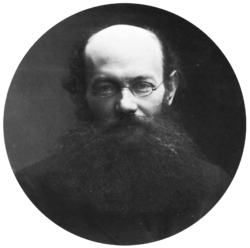
Quote of the Day: Kropotkin


"Every machine has had the same history -- a long record of sleepless nights and of poverty, of disillusions and of joys, of partial improvements discovered by several generations of nameless workers, who have added to the original invention these little nothings, without which the most fertile idea would remain fruitless. More than that: every new invention is a synthesis, the resultant of innumerable inventions which have preceded it in the vast field of mechanics and industry.

Science and industry, knowledge and application, discovery and practical realization leading to new discoveries, cunning of brain and of hand, toil of mind and muscle-all work together. Each discovery, each advance, each increase in the sum of human riches, owes its being to the physical and mental travail of the past and the present. By what right then can any one whatever appropriate the least morsel of this immense whole and say -- This is mine, not yours?"

- Pjotr Kropotkin, The Conquest of Bread.

Research - US Chemical Warfare.


VIETNAM.

Truth-Out: The Toxic Effects of Agent Orange Persist 51 Years After the Vietnam War.

Wikipedia: Wikipedia: Agent Orange

United States Department of Veterans Affairs: Veteran's Diseases Associated With Agent Orange

BBC: Agent Orange blights Vietnam.

The Guardian: Australia cancer deaths linked to Agent Orange.


FALLUJAH.

Al Jazeera: Fallujah babies: Under a new kind of siege

Al Jazeera: Inside Story Americas: Did the US cause Fallujah's birth defects?

The Guardian: Research links rise in Falluja birth defects and cancers to US assault

New Scientist: What is causing deformities in Fallujah's children?

The Independent: Robert Fisk: The Children of Fallujah - the hospital of horrors

Uruknet: Deformed babies in Fallujah - Letter to the United Nations.

The Arab American: New study from Ann Arbor toxicologist links Fallujah birth defects to U.S. weapons

World Health Organization: Depleted Uranium Factsheet.

Wikipedia: Depleted Uranium.

Information: Forarmet Uran, Forarmet Verden.

Wikipedia: White phosphorus use in Iraq.

Independent: The fog of war: white phosphorus, Fallujah and some burning questions

Washington Post: Pentagon Used White Phosphorous in Iraq.

BBC: US used white phosphorus in Iraq.

IPS: Those Laboratory Mice Were Children

International Journal of Environmental Studies and Health: Genetic damage and health in Fallujah Iraq worse than Hiroshima

Update [08-29-2013]: Foreign Policy: Exclusive: CIA Files Prove America Helped Saddam as He Gassed Iran

onsdag den 25. juli 2012

Karrieremagerne.

Af Chris Hedges. 

De største forbrydelser i menneskehedens historie muliggøres af de mest farveløse individer. De er karrieremagerne. Bureaukraterne. Kynikerne. De udfylder de små pligter som gør omfattende, komplicerede systemer af udbytning og død en realitet. De samler og læser personlige informationer, indsamlet om et tocifret antal millioner af os, af sikkerheds- og overvågningsstaten. De bogfører for ExxonMobil, BP og Goldman Sachs. De bygger eller flyver luftbårne droner. De arbejder indenfor den kapitalistiske reklamebranche og den statslige propaganda. De udsteder formularer. De bearbejder papirerne. De håndhæver lovene og reguleringerne. Og de stiller ingen spørgsmål.

 Godt. Ondt. Disse ord betyder ingenting for dem. De er hinsides moral. De er der for at sørge for at privatkapitalistiske systemer fungerer. Hvis forsikringsselskaber lader et tocifret antal millioner af syge lide og dø, så må det være sådan. Hvis banker og sheriffer smider folk ud af deres hjem, så må det være sådan. Hvis finansielle firmaer frarøver borgerne deres opsparinger, så må det være sådan. Hvis regeringen lukker skoler og biblioteker, så må det være sådan. Hvis militæret dræber børn i Afghanistan og Pakistan, så må det være sådan. Hvis spekulanter forhøjer prisen på ris og majs og hvede så de bliver ubetalelige for millioner af planetens fattige, så må det være sådan. Hvis Kongressen og domstolene fratager borgerne deres basale frihedsrettigheder, så må det være sådan. Hvis de fossile brændstoffers industri steger jorden med drivhusgasser som fordømmer os alle til undergang, så må det være sådan. De er tjenere af systemet. Udbytningens og profittens gud. Den farligste kraft i den industrialiserede verden kommer ikke fra dem som bærer radikale trosbekendelser, hvad end vi taler om islamisk radikalisme eller kristen fundamentalisme, men fra legioner af ansigtsløse bureaukrater som med kløerne baner sig vej op gennem private og statslige maskinerier. De tjener et hvilket som helst system som møder deres ynkelige behovskvoter.

Disse systemforvaltere tror ikke på noget. De har ingen loyalitet. De tænker ikke hinsides deres små, ubetydelige roller. De er blinde og døve. De er, i det mindste hvad angår den menneskelige civilisation og histories store ideer og mønstre, fuldstændige analfabeter. Og vi fremstiller dem på stribe på de store universiteter. Advokater. Teknokrater. MBAs. Finansielle managere. IT specialister. Konsulenter. Petroleumsingeniører. “Positive psykologer”. Kommunikationskandidater. Kadetter. Salgsrepræsentanter. Computer-programmører. Mænd og kvinder som intet kender til historien, intet til ideer. De lever og tænker i et intellektuelt tomrum, en verden bestående af meningsløse detaljer. De er T.S. Eliots “de hule mennesker”, “de udstoppede mennesker.” “formløse forme, skygger uden farve” skrev poeten. “paralyseret kraft, gestikulation uden bevægelse.”

Det var karrieremagerne som muliggjorde folkemordene, fra udryddelsen af de indfødte amerikanere til den tyrkiske nedslagtning af armenerne til det nazistiske holocaust til Stalins udryddelser. Det var dem som sørgede for at togene kørte til tiden. De udfyldte formularerne og stod bag beslaglæggelserne af ejendom. De rationerede maden mens børnene sultede. De fremstillede våbnene. De styrede fængslerne. De håndhævede rejseforbuddene, konfiskerede passene, beslaglagde bankkonti og udførte raceadskillelsen. De håndhævede loven. De passede deres arbejde.

Med støtte fra krigsspekulanter, har de politiske og militære karrieremagere ledt os ind i nytteløse krige, inklusiv første verdenskrig, Vietnam, Irak og Afghanistan. Og millioner fulgte dem. Pligt. Ære. Fædreland. Dødens folkefester. De ofrer os alle. I første verdens-krigs ørkesløse slag ved Verdonne og Somme, blev 1.8 millioner på begge sider myrdet, såret eller aldrig fundet. Til trods for have af døde, fordømte den britiske feltmarskal Douglas Haig i juli 1917 endnu flere til deres undergang i Passchendaeles mudder. Da man nåede frem til november og det var blevet klart at det lovede gennembrud ved Passchendaele havde slået fejl, kastede han det oprindelig mål over bord – ligesom vi gjorde i Irak da det viste sig, at der ikke var masseødelæggelsesvåben og i Afghanistan da Al-Qaeda forlod landet – og valgte i stedet at føre en simpel udmattelseskrig. Haig “vandt” hvis flere tyske end allierede tropper døde. Døden som et regnskabskort. Passchendaele tog mere end 600.000 liv på begge sider inden det endte. Det er ikke nogen ny historie. Generaler er næsten altid bajadser. Soldater fulgte Johannes den Blinde, som havde mistet sit syn et årti tidligere, hen til et eklatant nederlag ved slaget i Crécy i 1337 under hundredeårskrigen. Vi opdager først når det er for sent, at vore ledere er middelmådigheder.

David Lloyd George, som var premierminister under kampagnen i Passchendaele, skrev i sine erindringer: “[Før slaget ved Passchendaele] udarbejdede en kampvognenhed landkort, som viste hvordan et bombardement som havde tilintetgjort rørlægningen, uundgåeligt ville lede til en serie af pøle og de lokaliserede de præcise steder hvor vandene ville samle sig. Det eneste svar var en kategorisk befaling om, at de ikke skulle “sende flere af disse latterlige landkort.” Kort må tilpasses planerne og ikke omvendt. Kendsgerninger som kolliderede med planerne var sagen uvedkommende.”

Her har du forklaringen på hvorfor vores herskende eliter ikke gør noget ved klimaforandringer, nægter at respondere rationelt på økonomisk nedsmeltning og er ude af stand til at håndtere globaliseringens og imperiets kollaps. Disse omstændigheder støder sammen med systemets levedygtighed og bæredygtighed. Og bureaukrater kender kun til at tjene systemet. De kender kun til de forvaltningsfærdigheder de indtog på officersskolen eller handelshøjskolen. De kan ikke tænke selv. De kan ikke udfordre forudsætninger eller strukturer. De kan hverken følelsesmæssigt eller intellektuelt anerkende, at systemet måske braser sammen. Og således gør de det som Napoleon advarede var den største fejltagelse en general kunne lave – maler et fantasibillede af en situation og accepterer det som virkeligt. Men vi fornægter sorgløst virkeligheden sammen med dem. Manien efter den lykkelige slutning forblinder os. Vi ønsker ikke at tro det vi ser. Det er for deprimerende. Så vi flygter alle ind i det kollektive selvbedrag.

I Claude Lanzmanns monumentale dokumentarfilm om Holocaust, “Shoah,” interviewer han Filip Müeller, en tjekkisk jøde som overlevede udryddelserne i Auschwitz som medlem af “den særlige afdeling.” Müeller fortæller denne historie:

“En dag i 1943, da jeg allerede befandt mig i Krematorium 5, ankom et tog fra Bialystok. En fange i “den særlige afdeling” så en kvinde i ‛afklædningsrummet’ som var en af hans venners kone. Han fortalte hende ligeud: “Du bliver tilintetgjort. Om tre timer er du aske.” Kvinden troede ham fordi hun kendte ham. Hun løb rundt over det hele og advarede de andre kvinder. “vi bliver slået ihjel. Vi bliver gasset.” Mødre som bar deres børn på skuldrene ønskede ikke at høre dette. De jagede hende bort. Så hun gik hen til mændene. Til ingen nytte. Ikke at de ikke troede hende. De havde hørt rygter i Bialystoks ghetto, eller i Grodno, og andre steder. Men hvem ville høre den slags? Da hun så at de ikke ville lytte kradsede hun sig i ansigtet. Af fortvivlelse. I chok. Og hun begyndte at skrige.”

Hannah Arendt bemærkede i sin bog “Eichmann i Jerusalem” at Adolf Eichmann primært var motiveret af “en usædvanlig flid for at passe på sin personlige forfremmelse.” Han sluttede sig til nazipartiet fordi det var et godt karrierevalg. “problemet med Eichmann,” skrev hun, “var nøjagtig, at så mange var ligesom ham, og at disse mange hverken var perverterede eller sadistiske, at de var, og stadig er, frygteligt og frygtindgydende normale.” “Jo længere man lyttede til ham, jo mere åbenlyst blev det, at hans manglende evne til at tale var nært sammenhængende med en manglende evne til at tænke, navnlig, til at sætte sig i andres sted,” skrev Arendt. “Det var ikke muligt at kommunikere med ham, ikke fordi han løj men fordi han var omringet af det mest pålidelige værn imod ord og andres tilstedeværelse, og derfor imod virkeligheden som sådan.”

Gitta Sereny kommer med den samme pointe i hendes bog “Into That Darkness,” omhandlende Franz Stangl, Treblinkas øverstbefalende. Udpegelsen til SS var en forfremmelse for den østrigske politimand. Stangl var ingen sadist. Han talte mildt og var høflig. Han elskede sin kone og sine børn højt. Ulig mange andre officerer i de nazistiske lejre, tog han ikke jødiske kvinder som konkubiner. Har var duelig og særdeles velorganiseret. Han fandt stolthed i at have modtaget officiel ros som “den bedste lejrkommandør i Polen.” Fanger var blotte genstande. Gods. “Det var min profession,” sagde han. “Jeg nød det. Det tilfredsstillede mig. Og ja, jeg var ambitiøs omkring det, det vil jeg ikke nægte.” Da Sereny spurgte Stangl hvordan han som far kunne slå børn ihjel, svarede han, at han “sjældent så dem som individer. Det var altid en stor masse.... de var nøgne, tæt pakket sammen, løbende, drevet frem af pisk...” Han fortalte senere Sereny, at det mindede ham om Treblinka, da han første gang læste om lemminger.

Christopher Brownings essaysamling, “Vejen til Folkemord”, bemærker at det var “de moderate”, “normale” bureaukrater, ikke fanatikerne, som muliggjorde Holocaust. Germaine Tillion påpegede “den tragiske lethed [under Holocaust] hvormed “anstændige” mennesker blev de mest hjerteløse bødler uden tilsyneladende at bemærke hvad der skete dem.” Den russiske forfatter Vasily Grossman observerede i sin bog “Evigt Flydende” at “den nye stat behøvede ikke hellige apostle, fanatiske, inspirerede bygmestre, trofaste, fromme disciple. Den nye stat behøvede ikke engang tjenere – bare kontorister.”

“Den mest kvalmende type S.S. officer, var for mig personligt, kynikerne som ikke længere troede oprigtigt på sagen, men vedblev med at samle blodskyld for dets egen skyld.” skrev Dr. Ella Lingens-Reiner i “Frygtens Fanger” hendes brændende erindringer om Auschwitz. “Disse kynikere var ikke altid brutale overfor fangerne, deres adfærd ændrede sig med deres humør. De tog intet seriøst – hverken dem selv eller deres sag, hverken os eller situationen. En af de værste iblandt dem var Dr. Mengele, lejrens læge, som jeg tidligere har omtalt. Når et hold nyligt ankomne jøder blev klassificeret i dem som egnede sig til arbejde og dem som egnede sig til døden, fløjtede han en melodi og bevægede rytmisk sin tommelfinger over hans højre eller venstre skulder – hvilket betød henholdsvis ‘gas’ eller ‘arbejde.’ Han mente, at tilstandene i lejren var rådne, og gjorde endda et par ting for at forbedre dem, men samtidig begik han hjerteløst mord, uden nogen betænkeligheder.”

Disse hære af bureaukrater tjener et privatkapitalistisk system som i bogstaveligste forstand kommer til at slå os ihjel. De er ligeså kolde og usammenhængende som Mengele. De udfører minutiøse opgaver. De er føjelige. Eftergivende. De adlyder. De finder deres selvværd i virksomhedens prestige og magt, i deres stillingers status og deres karrieres forfremmelser. De forsikrer sig selv om deres egen godhed gennem private handlinger som ægtemænd, koner, mødre og fædre. De sidder i skolebestyrelser. De er medlemmer af en velgørenhedsorganisation. De går i kirke. Det er moralsk skizofreni. De opstiller mure og skaber en isoleret bevidsthed. De muliggør ExxonMobils eller Goldman Sachs eller Raytheons eller forsikringsselskabers dødbringende målsætninger. De destruerer økosystemet, økonomien og statslegemet og gør arbejdende mænd og kvinder til armodige tjenere. De føler intet. Metafysisk naivitet ender næsten altid i mord. Det fragmenterer verden. Små søde handlinger og velgørenhed maskerer den monstrøse ondskab de tilskynder. Og systemet ruller fremad. Polarisen smelter. Tørkerne raser over de dyrkede jorder. Dronerne leverer død fra himmelen. Staten bevæger sig ubønhørligt fremad og sætter os alle i lænker. De syge dør. De fattige sulter. Fængslerne fyldes. Og karrieremageren trasker fremad og udfører sit arbejde.

søndag den 23. oktober 2011

Ooops!

Quote of the day: Pierre-Joseph Proudhon


"To be governed is to be watched over, inspected, spied on, directed, legislated at, regulated, docketed, indoctrinated, preached at, controlled, assessed, weighed, censored, ordered about, by men who have neither the right, nor the knowledge, nor the virtue. ... To be governed is to be at every operation, at every transaction, noted, registered, enrolled, taxed, stamped, measured, numbered, assessed, licensed, authorized, admonished, forbidden, reformed, corrected, punished. It is, under the pretext of public utility, and in the name of the general interest, to be placed under contribution, trained, ransomed, exploited, monopolized, extorted, squeezed, mystified, robbed; then, at the slightest resistance, the first word of complaint, to be repressed, fined, despised, harassed, tracked, abused, clubbed, disarmed, choked, imprisoned, judged, condemned, shot, deported, sacrificed, sold, betrayed; and, to crown all, mocked, ridiculed, outraged, dishonoured. That is government; that is its justice; that is its morality."

Proudhon: The General Idea of the Revolution(1851).

onsdag den 19. oktober 2011

Crushing Captalism with Direct Action.


By Thomas Bonde.

The existence of the corporate capitalist system is highly dependent upon the economic inputs of ordinary working people. It is thus to a significant degree the cooperation of ordinary working people that makes the system possible. Engaging consciously in non-cooperative direct action is therefore a potent way of undermining the system.

Move Your Money:

Do not let your money work for large multinational banks that make considerable amounts of money on centralizing wealth in the hands of the few without any regard to the needs of ordinary people and/or the necessity of sustainable economic activity and development. Regardless of how little you may own, do not let your money work for their shortsighted and destructive production of profit for the wealthiest. If it is any way possible for you, it is strongly recommended that you move your money to a cooperative and egalitarian bank that puts great emphasis on supporting a sustainable collective evolution of humanity.

Build Cooperatives:

One of the primary problems inherent in the globalized corporate capitalist system is what we might call the ownership problem. Gigantic centrally planned multinational corporations dominate the prevailing economic system. They are characteristic by being owned by relatively few people who are often not themselves members of the productive labor force within the organization. The primary producers of value i.e. the laborers, are therefore not the receivers of the full fruit of their toil, but instead sell their time and life for fixed wages detached from the amount of profit generated.

Another characteristic is the centralized planning at the top level of these hierarchical organizations and their top-down decision-making structures. This typically means that the workers do not have any influence on what is produced and how the profits are to be distributed and/or reinvested. If you consider this an unjust state of affairs then you should apply the aforementioned principle of non-cooperation and avoid selling your life, labor and time to such organizations. Instead it is advisable to team up with others in a spirit of mutuality and solidarity and start organizations that are co-owned and cooperatively run on an egalitarian basis in ways that give everyone a say on how profits are distributed and spent.

Conscious consumerism:

Another aspect of non-cooperative direct action is conscious consumerism. Not spending your money to the advantage of corporate structures of economic power, but instead using them in ways that support the above-mentioned cooperative organizations, is an easy and effective way of directly combating corporate capitalism while simultaneously supporting and strengthening sustainable and just alternatives.

Use Alternative Currencies:

There are many alternative forms of currency already in use around the world of both monetary and non-monetary varieties. By using these to the greatest possible extent, instead of using the dominant currencies issued by central banks, you are contributing to the subversion of corporate capitalism (at least to the degree that they are not themselves partaking in the use of these alternative currencies). Non-monetary alternative currencies such as time banks are especially interesting and have great subversive potential in that they can not be taxed and the possibility of subsidizing corporate entities through the taxation of your labor is therefore greatly diminished.

Raise Awareness:

By doing any or all of the above you are already participating in the anti-capitalist struggle by setting a personal example that hopefully will inspire many others, but why stop there? You may also want to consider raising awareness about the systematic repression inherent in the capitalist system. This can be done in many ways and it is really only your imagination that limits you here. You can for example organize public screenings of critical and in-depth documentaries or invite interesting anti-capitalist voices to come and debate and educate people near you or you can join an organization that already has a history of raising awareness and support their work with your time and labor. Of course there is also the by now obvious possibility of participating in one of the many occupations of public space currently going on in cities around the world.

Keep the spirit high. The struggle continues!

tirsdag den 18. oktober 2011

Flyt dine penge.


Flyt dine penge, uanset hvor få du måtte eje, over i et kooperativt pengeinstitut med en flad organisationsstruktur og et stærkt fokus på bæredygtighed og styrkelse af fællesskaber. Hermed links til tre af slagsen. Et af de stærkeste våben i kampen mod spekulanterne er vores mulighed for ikke at samarbejde med dem, så lad være med at lade dine penge, uanset om du blot ejer en tyver, arbejde for store banker der er ligeglade med almindelige menneskers behov.

http://www.merkur.dk/
http://www.faelleskassen.dk/
http://www.oikos.dk/

søndag den 16. oktober 2011

Julian Assange Speech Occupy London Stock Exchange October 15 2011

Footage of Times Square occupation 15th of October

Afghan opium production 'rises by 61%' compared with 2010


Opium production in Afghanistan rose by an estimated 61% this year compared with 2010, according to a UN report.

The increase has been attributed to rising opium prices that have driven farmers to expand cultivation of the illicit opium poppy by 7% in 2011.

BBC.

lørdag den 15. oktober 2011

Persondyrkelse kontra tænkning.

I "Det Kommunistiske Manifest" kan der ikke herske den store tvivl om, at Marx agiterer for en autoritær samfundsorden, organiseret på statsligt niveau. Efter revolutionen skal proletariatets diktatur "centralisere alle produktionsinstrumenter i statens hænder", foretage en "centralisering af kreditten i statens hænder ved hjælp af en nationalbank med statskapital og absolut monopol" samt foretage en "centralisering af transportvæsenet i statens hænder", mens det hedder sig, at man skal indføre "lige arbejdstvang for alle" og der desuden opfordrers til "oprettelse af industrielle armeer, særlig indenfor landbruget".

Om dette skrev Bakunin i 1873: "The leaders of the Communist Party, namely Mr. Marx and his followers, will concentrate the reins of government in a strong hand. They will centralize all commercial, industrial, agricultural, and even scientific production, and then divide the masses into two armies — industrial and agricultural — under the direct command of state engineers, who will constitute a new privileged scientific and political class."

Er der her tale om et uretfærdigt angreb på en politisk modstander eller snarere om hvad man retmæssigt kan udlede af Marx' egne ord i "Det Kommunistiske Manifest"? Det forekommer åbenlyst, at der er tale om det sidste, idet det vist giver sig selv, at såfremt staten råder over alle produktionsinstrumenterne, transporten og kreditten og tvinger folk til at arbejde (for staten), så har staten arbejderklassen i et jerngreb.

At man også kan påvise visse autoritære elementer i Bakunins tænkning er knap så interessant, vil jeg tillade mig at mene, idet Bakunin overhovedet ikke spiller samme rolle i anarkismen (eller historien) som Marx gør i marxismen. Der er ikke, så vidt vides, nogen indflydelsesrig og levende anarkistisk retning som kalder sig bakunisme. Bakunin var desuden også glødende antisemitisk i nogle tekster, hvilket der ikke er nogen grund til at forsvare eller tale udenom, med mindre man gør sig i persondyrkelse.

Hos folk med en enorm skriftlig produktion kan man ofte finde selvmodsigelser og agitation for modsatrettede tanker. I Marx' tekster kan man således finde både libertære og autoritære tanker. I sidste ende er det væsentlige imidlertid nok, hvilke skrifter der har haft mest indflydelse på historiens gang og der hersker her ikke den store tvivl om, at Marx' autoritære side har haft mere indflydelse på historien, end hans mere libertære side. Den anarkistiske filosof Crispin Sartwell, som mener at Marx var en langt bedre tænker end Bakunin, er her værd at citere:

The project of making [..] Marx come out as right as possible is a silly project, and one entirely unworthy of an actual thinker. Take what's right; reject the rest. Why not? Why not just say he's wrong about "industrial armies" etc., but right about x, y, and z? Why? because you're a follower not a philosopher. In which case, I don't actually need to read what you write or think about what you say. [...] You should read Marx exactly like you read any arguments, accounts, assertions: critically. You should take what you can use or what you can argue for or what works and leave all the rest without a moment's hesitation. [...] Don't defend Marx at all costs, or at any cost at all: take what's right and leave what's not: it doesn't matter. Marx is dead; he's not going to be impressed that you agree with him. [marxism] is supposed to be some kind of philosophy, science, history: not a religion that demands you're unquestioning capitulation to its myriad absurdities.
Hvis en politisk filosofi degenererer til persondyrkelse af ideologiske patriarker, ophører den med at være filosofi, idet tænkningens ædle kunst af nødvendighed må være funderet på spørgen og tvivlen, hvorfor tænkningen altså må betegnes som grundlæggende anti-autoritær. I modsætning hertil har vi overbevisningen, som er kendetegnet ved, at al tvivl og spørgen er bragt til ophør. Den som med næb og klør forsvarer sine ideologiske overbevisningers ophavsmænd, selv når de kommer med de mest menneskefjendske argumenter, er snarere overbevist som religiøse mennesker, end tvivlende og spørgende, som tænkende mennesker. I stedet for overbevisningens fangenskab indenfor en given ideologisk matrices perspektiv, bør vi kultivere en sund skepsis overfor ethvert perspektiv som postulerer at være det eneste sande. Emancipation foregår ikke kun på det sociale/intersubjektive plan, med ligeledes på det kognitive/subjektive plan.  

Michael Moore: Why the Occupy Wall Street Movement Can't Be Stopped.

Visit msnbc.com for breaking news, world news, and news about the economy

fredag den 14. oktober 2011

Immortal Technique at Occupy Wall Street: "We are here to stay"

Vi er forandringen. Vi er det nye alternativ.

Vi ser ingen positiv fremtid i en økonomi baseret på spekulanter og købmænd som kun tænker på at tjene penge, uden hensyn til andre menneskers og naturens behov. Vi ønsker en økonomi der tjener mennesket på en bæredygtig og retfærdig måde. En økonomi som er til gavn for alle, i stedet for som nu, hvor alt for mange tjener en uretfærdig og ubæredygtig økonomi, der mestendels er til gavn for de få.

Vi ser friheden som en af de vigtigste drivkræfter i den positive udvikling af menneskeheden og ønsker derfor et samfund hvor den enkelte har den størst mulige frihed til at gøre som han eller hun måtte ønske, så længe disse handlinger ikke skader andres muligheder for at gøre som de ønsker. Vores frihed slutter hvor andres frihed begynder. Vælger vi at følge denne enkle læresætning i vores liv vil meget være opnået.

Vi mener at sammenhold og solidaritet er vigtige forudsætninger for en positiv, kollektiv udvikling af vores fællesskaber og opfordrer derfor alle til at være solidariske, samarbejdende og delende i alle livets mange rum. Hver for sig er vi svage og skrøbelige enkeltpersoner. Kun ved at stå sammen, samarbejde og dele livets glæder, opnår vi den nødvendige styrke til at skabe positiv kollektiv forandring.

Vi ser frem til at dele fremtidens fællesskaber med mennesker, der ligesom os, mest af alt blot ønsker at være frie og elskede og som derfor giver andre mennesker plads til at være frie, elskede og elskende. Kærligheden og friheden er de vigtigste kræfter i verden. Med dem er vi uendeligt stærke og ressourcefulde, mens vi uden dem er arme stakler på fast kurs mod undergangen. Det er derfor på høje tid at vi lader kærligheden og friheden vinde over frygten og dens nære slægtning - den usikre, barnlige egoisme.

Vi ønsker et samfund hvor der er frihed til forskellighed og hvor mange farver på paletten betragtes som en rigdom og en styrke. Vi anser mangfoldighed og åbenhed overfor andre perspektiver på tilværelsen end vores egne for en uvurderlig styrke. Vi ønsker derfor et samfund hvor der er plads til diversitet.

Vi mener det er af højeste vigtighed, at vi værner om den natur som garanterer vores overlevelse og som eneste dag forsyner os med produkter som er vigtige for vores overlevelse. Vi anser derfor bæredygtighed og styrkelser af naturen for at være nødvendige forudsætninger for en positiv kollektiv nutid og fremtid ifælleskab på planeten Jorden.

Vi er trætte af at blive domineret af mennesker, som mener de er bedre egnet end os til at træffe væsentlige beslutninger, som påvirker vores allesammens dagligdag. Vi ønsker direkte indflydelse på måden hvorpå vores fællesskaber indrettes og styres og vi ønsker derfor muligheden for, at være medbestemmende og medstyrende i alle de institutioner som vi, vores forældre og børn, befinder os i.

fredag den 23. september 2011

Kropotkin: Appeal to the Young.

Don't let anyone tell us that we—but a small band—are
too weak to attain unto the magnificent end at which we aim.
Count and see how many there are who suffer this injustice.
We peasants who work for others, and who mumble the
straw while our master eats the wheat, we by ourselves are
millions.

We workers who weave silks and velvet in order that we
may be clothed in rags, we, too, are a great multitude; and
when the clang of the factories permits us a moments repose,
we overflow the streets and squares like the sea in a
spring tide.

We soldiers who are driven along to the word of command,
or by blows, we who receive the bullets for which our
officers get crosses and pensions, we, too, poor fools who have
hitherto known no better than to shoot our brothers, why we
have only to make a right about face towards these plumed
and decorated personages who are so good as to command
us, to see a ghastly pallor overspread their faces.

Aye, all of us together, we who suffer and are insulted
daily, we are a multitude whom no one can number, we are
the ocean that can embrace and swallow up all else. When
we have but the will to do it, that very moment will justice
be done: that very instant the tyrants of the earth shall bite
the dust.

- Pyotr Kropotkin, "An Appeal to the Young," 1880

mandag den 19. september 2011

Autoritær socialisme er statskapitalisme.

Begrebet socialisme synes at implicere, at der er tale om et prosocialt snarere end om et asocialt fænomen og det er derfor nok på sin plads, at forsøge at komme med et gangbart bud på hvad begrebet social implicerer. Ordet kommer af det latinske socialis som knytter sig til det ligeledes latinske socius der betyder følgesvend, men fortæller de etymologiske rødder os noget om, hvad det sociale er indbegrebet af?

Mellem to følgesvende er der snarere tale om et nogenlunde lige forhold, end der er tale om et forhold karakteristisk ved, at den ene part dominerer den anden og påtvinger denne sine meninger og præferencer. At følges ad implicerer noget jævnbyrdigt, mens at følge efter, eller at følge ordrer, nok nærmere implicerer det modsatte.

Ordet social har altså derfor sine sproglige rødder i noget der nok ikke ligger væk langt fra hvad de fleste vel mener når de taler om, at en person er et meget socialt væsen. For når vi synes at nogen handler socialt, mener vi vel i reglen, at vedkommende handler på en måde som er opretholdende for det sociale forhold, ved at give plads til den anden, i stedet for at dominere ham eller hende. Modsat mener vi vel ofte, når vi taler om at en person handler asocialt, at vi har at gøre med et menneske som ikke giver plads til sine medmennesker, men som i stedet forsøger at påtvinge dem sine egne egoistiske præferencer. Den asociale handler altså på en måde der er ødelæggende for det sociale forhold, mens den sociale opretholder og styrker det.

Ovenstående forsøg på en indkredsning af hvad der kendetegner det sociale, som et kendetegn ved socialisme, er imidlertid vanskeligt foreneligt med det meste af den statsindlejrede og autoritære socialisme vi har været og fortsat er vidner til. Den autoritære, statsopretholdende - eller endda statsekspanderende - variant af socialismen er en selvmodsigelse.

Ønsker man, som mange venstreorienterede påstår, at destruere klassesamfundets indbyggede sociale uligheder, er svaret derfor ikke mere stat, men mindre. I et samfund hvor staten overtager alle produktionsmidlerne bliver alle - undtagen de som styrer staten - gjort til proletarer og man har således ikke forringet, endsige destrueret, klassesamfundets uretfærdige og asociale dominansstrukturer, men derimod gjort dem endnu mere omfattende qua proletariseringen af alle. Den herskende kapitalistiske klasse er godt nok blevet sendt hen hvor peberet gror, men erstatningen, i form af en herskende statslig klasse, kan ikke siges at have elimineret kapitalismens indbyggede autoritære og derfor asociale uretfærdighed. Uretfærdigheden har blot fået et andet navn.

Hvis socialismens mål er etableringen af gunstige, frigjorte og sociale forhold for arbejderne på deres arbejdspladser, realiseres dette derfor ikke ved at udskifte et autoritært og således asocialt forhold med et andet, for hvilken frigørelse fra det autoritære og asociale klassesamfunds snærende bånd skulle man derved have opnået? Arbejdernes fælles ejerskab af produktionsmidlerne står altså derfor i skarp kontrast til et statsligt ejerskab af disse. I første tilfælde ejes og forvaltes produktionsmidlerne kollektivt af arbejderne selv i en ikke-hierarkisk og horisontal organisationsstruktur. I det andet ejes og forvaltes produktionsmidlerne af nationalstaten i en hierarkisk og vertikal organisationsstruktur, idet disse er statens organisatoriske kendetegn. Når arbejderne kollektivt ejer og forvalter produktionsmidlerne på en ikke-hierarkisk og horisontal måde er der endvidere tale om en strukturel decentralisering, mens der i det nationalstatsejede tilfælde, i modsætning hertil, er tale om en strukturel centralisering, da staten per definition er et centralistisk fænomen.

Nationaliseringer af produktionsmidlerne kan derfor ikke siges at være prosociale, men må snarere siges at være asociale, idet der er tale om en styrkelse af det autoritære og socialt ulige forhold som den autoritære og vertikale stats organisatoriske struktur implicerer. Overtager staten produktionsmidlerne foretages der derfor ikke et egentligt opgør med kapitalismen. Det er blot tale om et skift fra en privatejet kapitalisme til en statsejet. Statssocialismen kan derfor vanskeligt siges at leve op til den ligebyrdige socialitet som begrebet socialisme synes at implicere, men må snarere siges at undergrave denne ligebyrdighed ved at fortsætte den asociale, hierarkiske og dominansorienterede kapitalisme, blot med andre midler og under andre ejerskabsformer.

tirsdag den 13. september 2011

Tænk hvis....


Tænk hvis alle centrale magtformer var blevet sendt hen hvor peberet gror i 1900. Det kan let tænkes at verden i så fald ville have været lykkeligt foruden rigtig mange sørgelige fænomener og begivenheder. Uden centrale magtformer...

- Ingen grænser.

- Ingen verdenskrige, kold krig eller andre statsligt funderede krige.

- Ingen atomvåben og mutually assured destruction.

- Ingen subsidiering af våbensektoren og sandsynligvis meget mindre oprustning.

- Ingen arbejds- og udryddelseslejre.

- Ingen Holocaust, Halabja eller Hiroshima.

- Ingen stalinisme, maoisme, nazisme, fascisme eller neoliberalisme.

- Ingen systematisk tortur begået i statsligt regi.

- Ingen magtfulde efterretningstjenester og politistater.

- Ingen topstyrede militære organisationer.

- Ingen administrativ uigennemsigtighed.

- Ingen centrale statslige propagandaorganer.

- Ingen centralbanker eller centraladministrationer.

- Ingen politikere eller embedsmænd.

- Ingen kriminalisering af offerløse handlinger.

- Ingen tvangsskoling, tvangsaktivering eller værnepligt.

- Ingen EU, NATO eller Amerikansk imperialisme.

- Ingen OPEC, Verdensbank, IMF eller WTO.

- Ingen transnationale selskaber eller globaliseret kapitalisme.

Herman Daly - on Globalisation

mandag den 12. september 2011

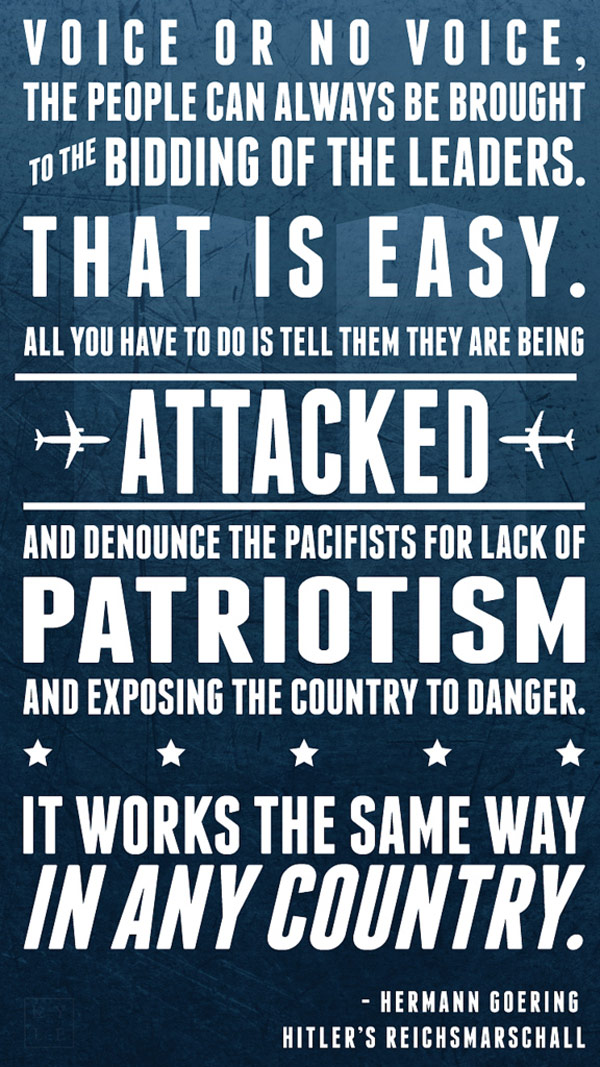
Dagens Citat: Hermann Göring

9/11: When truth became a casualty of war.

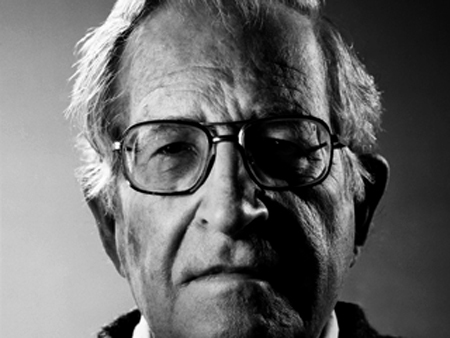
Dagens Citat: Noam Chomsky.


"Intellectuals are in a position to expose the lies of governments, to analyze actions according to their causes and motives and often hidden intentions. In the Western world, at least, they have the power that comes from political liberty, from access to information and freedom of expression. For a privileged minority, Western democracy provides the leisure, the facilities, and the training to seek the truth lying hidden behind the veil of distortion and misrepresentation, ideology and class interest, through which the events of current history are presented to us."

The Responsibility of Intellectuals.

lørdag den 10. september 2011

"In most important ways you are probably already an anarchist — you just don’t realize it."

Are You An Anarchist?

by David Graeber.

Chances are you have already heard something about who anarchists are and what they are supposed to believe. Chances are almost everything you have heard is nonsense. Many people seem to think that anarchists are proponents of violence, chaos, and destruction, that they are against all forms of order and organization, or that they are crazed nihilists who just want to blow everything up. In reality, nothing could be further from the truth. Anarchists are simply people who believe human beings are capable of behaving in a reasonable fashion without having to be forced to. It is really a very simple notion. But it’s one that the rich and powerful have always found extremely dangerous.

At their very simplest, anarchist beliefs turn on to two elementary assumptions. The first is that human beings are, under ordinary circumstances, about as reasonable and decent as they are allowed to be, and can organize themselves and their communities without needing to be told how. The second is that power corrupts. Most of all, anarchism is just a matter of having the courage to take the simple principles of common decency that we all live by, and to follow them through to their logical conclusions. Odd though this may seem, in most important ways you are probably already an anarchist — you just don’t realize it.

Let’s start by taking a few examples from everyday life:

If there’s a line to get on a crowded bus, do you wait your turn and refrain from elbowing your way past others even in the absence of police?


If you answered “yes”, then you are used to acting like an anarchist! The most basic anarchist principle is self-organization: the assumption that human beings do not need to be threatened with prosecution in order to be able to come to reasonable understandings with each other, or to treat each other with dignity and respect.

Everyone believes they are capable of behaving reasonably themselves. If they think laws and police are necessary, it is only because they don’t believe that other people are not. But if you think about it, don’t those people all feel exactly the same way about you? Anarchists argue that almost all the anti-social behavior which makes us think it’s necessary to have armies, police, prisons, and governments to control our lives, is actually caused by the systematic inequalities and injustice those armies, police, prisons and governments make possible. It’s all a vicious circle. If people are used to being treated like their opinions do not matter, they are likely to become angry and cynical, even violent — which of course makes it easy for those in power to say that their opinions do not matter. Once they understand that their opinions really do matter just as much as anyone else’s, they tend to become remarkably understanding. To cut a long story short: anarchists believe that for the most part it is power itself, and the effects of power, that make people stupid and irresponsible.

Are you a member of a club or sports team or any other voluntary organization where decisions are not imposed by one leader but made on the basis of general consent?


If you answered “yes”, then you belong to an organization which works on anarchist principles! Another basic anarchist principle is voluntary association. This is simply a matter of applying democratic principles to ordinary life. The only difference is that anarchists believe it should be possible to have a society in which everything could be organized along these lines, all groups based on the free consent of their members, and therefore, that all top-down, military styles of organization like armies or bureaucracies or large corporations, based on chains of command, would no longer be necessary. Perhaps you don’t believe that would be possible. Perhaps you do. But every time you reach an agreement by consensus, rather than threats, every time you make a voluntary arrangement with another person, come to an understanding, or reach a compromise by taking due consideration of the other person’s particular situation or needs, you are being an anarchist — even if you don’t realize it.

Anarchism is just the way people act when they are free to do as they choose, and when they deal with others who are equally free — and therefore aware of the responsibility to others that entails. This leads to another crucial point: that while people can be reasonable and considerate when they are dealing with equals, human nature is such that they cannot be trusted to do so when given power over others. Give someone such power, they will almost invariably abuse it in some way or another.

Do you believe that most politicians are selfish, egotistical swine who don’t really care about the public interest? Do you think we live in an economic system which is stupid and unfair?


If you answered “yes”, then you subscribe to the anarchist critique of today’s society — at least, in its broadest outlines. Anarchists believe that power corrupts and those who spend their entire lives seeking power are the very last people who should have it. Anarchists believe that our present economic system is more likely to reward people for selfish and unscrupulous behavior than for being decent, caring human beings. Most people feel that way. The only difference is that most people don’t think there’s anything that can be done about it, or anyway — and this is what the faithful servants of the powerful are always most likely to insist — anything that won’t end up making things even worse.

But what if that weren’t true?

And is there really any reason to believe this? When you can actually test them, most of the usual predictions about what would happen without states or capitalism turn out to be entirely untrue. For thousands of years people lived without governments. In many parts of the world people live outside of the control of governments today. They do not all kill each other. Mostly they just get on about their lives the same as anyone else would. Of course, in a complex, urban, technological society all this would be more complicated: but technology can also make all these problems a lot easier to solve. In fact, we have not even begun to think about what our lives could be like if technology were really marshaled to fit human needs. How many hours would we really need to work in order to maintain a functional society — that is, if we got rid of all the useless or destructive occupations like telemarketers, lawyers, prison guards, financial analysts, public relations experts, bureaucrats and politicians, and turn our best scientific minds away from working on space weaponry or stock market systems to mechanizing away dangerous or annoying tasks like coal mining or cleaning the bathroom, and distribute the remaining work among everyone equally? Five hours a day? Four? Three? Two? Nobody knows because no one is even asking this kind of question. Anarchists think these are the very questions we should be asking.

Do you really believe those things you tell your children(or that your parents told you)?

It doesn’t matter who started it.” “Two wrongs don’t make a right.” “Clean up your own mess.” “Do unto others...” “Don’t be mean to people just because they’re different.” Perhaps we should decide whether we’re lying to our children when we tell them about right and wrong, or whether we’re willing to take our own injunctions seriously. Because if you take these moral principles to their logical conclusions, you arrive at anarchism.

Take the principle that two wrongs don’t make a right. If you really took it seriously, that alone would knock away almost the entire basis for war and the criminal justice system. The same goes for sharing: we’re always telling children that they have to learn to share, to be considerate of each other’s needs, to help each other; then we go off into the real world where we assume that everyone is naturally selfish and competitive. But an anarchist would point out: in fact, what we say to our children is right. Pretty much every great worthwhile achievement in human history, every discovery or accomplishment that’s improved our lives, has been based on cooperation and mutual aid; even now, most of us spend more of our money on our friends and families than on ourselves; while likely as not there will always be competitive people in the world, there’s no reason why society has to be based on encouraging such behavior, let alone making people compete over the basic necessities of life. That only serves the interests of people in power, who want us to live in fear of one another. That’s why anarchists call for a society based not only on free association but mutual aid. The fact is that most children grow up believing in anarchist morality, and then gradually have to realize that the adult world doesn’t really work that way. That’s why so many become rebellious, or alienated, even suicidal as adolescents, and finally, resigned and bitter as adults; their only solace, often, being the ability to raise children of their own and pretend to them that the world is fair. But what if we really could start to build a world which really was at least founded on principles of justice? Wouldn’t that be the greatest gift to one’s children one could possibly give?

Do you believe that human beings are fundamentally corrupt and evil, or that certain sorts of people (women, people of color, ordinary folk who are not rich or highly educated) are inferior specimens, destined to be ruled by their betters?

If you answered “yes”, then, well, it looks like you aren’t an anarchist after all. But if you answered “no”, then chances are you already subscribe to 90% of anarchist principles, and, likely as not, are living your life largely in accord with them. Every time you treat another human with consideration and respect, you are being an anarchist. Every time you work out your differences with others by coming to reasonable compromise, listening to what everyone has to say rather than letting one person decide for everyone else, you are being an anarchist. Every time you have the opportunity to force someone to do something, but decide to appeal to their sense of reason or justice instead, you are being an anarchist. The same goes for every time you share something with a friend, or decide who is going to do the dishes, or do anything at all with an eye to fairness.

Now, you might object that all this is well and good as a way for small groups of people to get on with each other, but managing a city, or a country, is an entirely different matter. And of course there is something to this. Even if you decentralize society and puts as much power as possible in the hands of small communities, there will still be plenty of things that need to be coordinated, from running railroads to deciding on directions for medical research. But just because something is complicated does not mean there is no way to do it democratically. It would just be complicated. In fact, anarchists have all sorts of different ideas and visions about how a complex society might manage itself. To explain them though would go far beyond the scope of a little introductory text like this. Suffice it to say, first of all, that a lot of people have spent a lot of time coming up with models for how a really democratic, healthy society might work; but second, and just as importantly, no anarchist claims to have a perfect blueprint. The last thing we want is to impose prefab models on society anyway. The truth is we probably can’t even imagine half the problems that will come up when we try to create a democratic society; still, we’re confident that, human ingenuity being what it is, such problems can always be solved, so long as it is in the spirit of our basic principles-which are, in the final analysis, simply the principles of fundamental human decency.

torsdag den 8. september 2011

Percy Bysshe Shelley: "Song To The Men Of England"

Men of England, wherefore plough
For the lords who lay ye low?
Wherefore weave with toil and care
The rich robes your tyrants wear?

Wherefore feed and clothe and save,
From the cradle to the grave,
Those ungrateful drones who would
Drain your sweat -nay, drink your blood?

Wherefore, Bees of England, forge
Many a weapon, chain, and scourge,
That these stingless drones may spoil
The forced produce of your toil?

Have ye leisure, comfort, calm,
Shelter, food, love's gentle balm?
Or what is it ye buy so dear
With your pain and with your fear?

The seed ye sow another reaps;
The wealth ye find another keeps;
The robes ye weave another wears;
The arms ye forge another bears.

Sow seed, -but let no tyrant reap;
Find wealth, -let no imposter heap;
Weave robes, -let not the idle wear;
Forge arms, in your defence to bear.

Shrink to your cellars, holes, and cells;
In halls ye deck another dwells.
Why shake the chains ye wrought? Ye see
The steel ye tempered glance on ye.

With plough and spade and hoe and loom,
Trace your grave, and build your tomb,
And weave your winding-sheet, till fair
England be your sepulchre!